Five Best Practices Every Healthcare Chatbot Should Follow
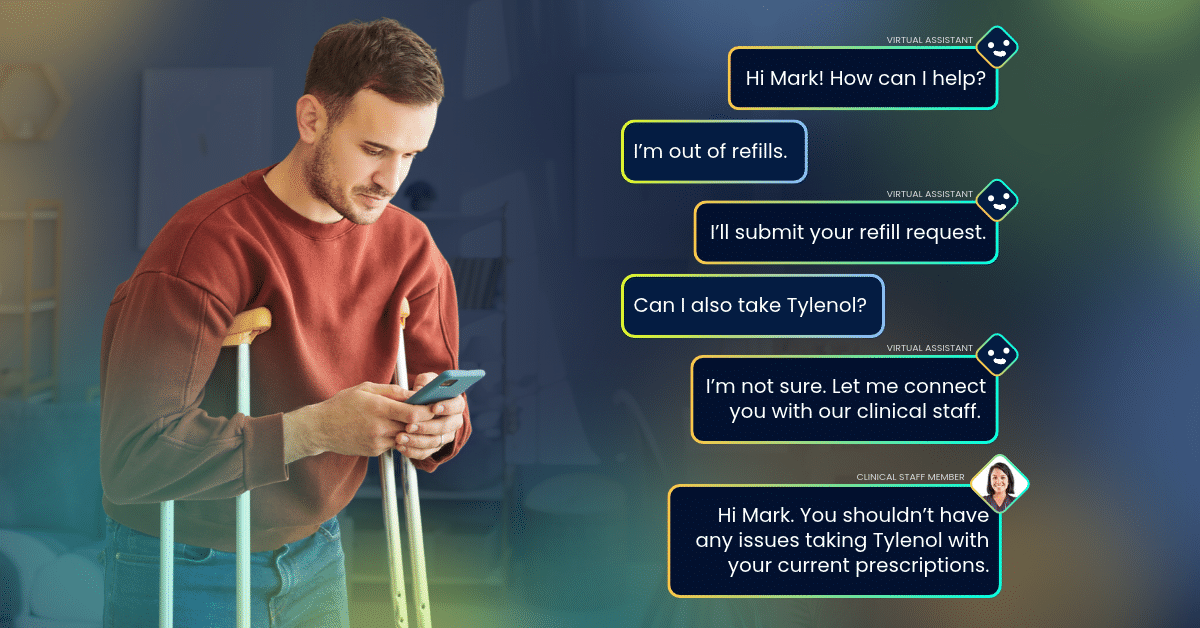
Healthcare chatbots now answer refill questions, book appointments, and guide patients through intake forms at any hour. Most teams judge them by whether they give the right answer. The harder questions are what happens to the conversation afterward, and where the chatbot’s job should end.
Getting those answers right is what makes a chatbot safe to trust with patients. California’s AB 1979, signed a month ago, already writes several of the practices below into law.
1. Treat Every Conversation as Medical Information
Patients tell chatbots about symptoms, medications, and worries they might not mention anywhere else. That information deserves the same protection as anything in their chart.
Protection shouldn’t stop at what patients type, either. A chatbot also draws conclusions from a conversation, and those conclusions can be just as sensitive. California’s AB 1979 now puts consumer healthcare chatbots under the state’s medical privacy law, including what they infer.
Privacy Questions for Your Healthcare Chatbot
2. Keep Patient Data Walled Off
A conversation should only be used to help that patient. It shouldn’t sit beside another organization’s data or become training material for someone else’s AI.
Once patient data leaves your control, you can’t take it back, and you can’t promise patients how it will be used. Keeping it walled off is the simplest way to keep that promise.
Data Questions for Your Healthcare Chatbot
3. Log Every Interaction
If a patient or regulator asks how their information was handled, you’ll need a clear answer. A complete record of what the chatbot said, collected, and passed along is how you give one. Good records also show your team where the chatbot gets confused, so you can fix it.
Record-Keeping Questions for Your Healthcare Chatbot
4. Separate Routine Tasks From Clinical Judgment
Chatbots are great at scheduling, reminders, and helping patients find information. Diagnosis and treatment decisions belong with licensed professionals.
A chatbot that strays into clinical advice can give a patient the wrong answer with total confidence. Keeping a licensed person in charge of clinical decisions protects patients and the clinicians responsible for their care. California’s AB 1979 now requires healthcare organizations to keep that judgment with licensed providers, while leaving routine tasks like booking alone.
Clinical Questions for Your Healthcare Chatbot
5. Make the Path to a Human Fast and Complete
Patients should know they’re talking to a chatbot and always have a clear way to reach a person. When a conversation turns clinical, the person who picks it up should see everything that came before.
A slow or clumsy handoff is where patients lose confidence. Making people repeat themselves, or leaving them unsure whether anyone is listening, undoes the good work the chatbot did. California already requires both a disclaimer and a clear way to reach a human when generative AI handles clinical patient messages.
Handoff Questions for Your Healthcare Chatbot
Good Practice Comes Before the Law
Patients often turn to a chatbot with questions that matter a lot to them. A chatbot that protects what they share and knows when to bring in a person earns their trust, along with the trust of the clinicians and compliance teams behind it.
That’s reason enough to follow these practices. California just made several of them law, too.
We’re not lawyers, but we do know secure patient communication. Curious how a chatbot can handle the volume and still stay within reach of a human? LinkLive‘s Chatbot IVA is one place to see it in practice.

